Database migrations are a crucial part of application development, especially when dealing with dynamically generated tables. Traditional migration tools often require extensive setup and can be cumbersome for tables that are created on the fly. I ran through this problem when we added a new feature that generates text using an LLM, and we needed to store the generation price as part of the metrics, traditionally, this would require creating migrations and running them, but I wanted to avoid that, because this table is generated on the fly and I didn’t want to maintain a migration history for it, so I wrote SQLMigrately, a simple python library that allows you to migrate tables without any setup.
The Problem
When working with analytics or monitoring systems, tables are often generated based on runtime metrics. These tables might not exist when deploying updates, making traditional migration tools less effective.
A Simple Solution
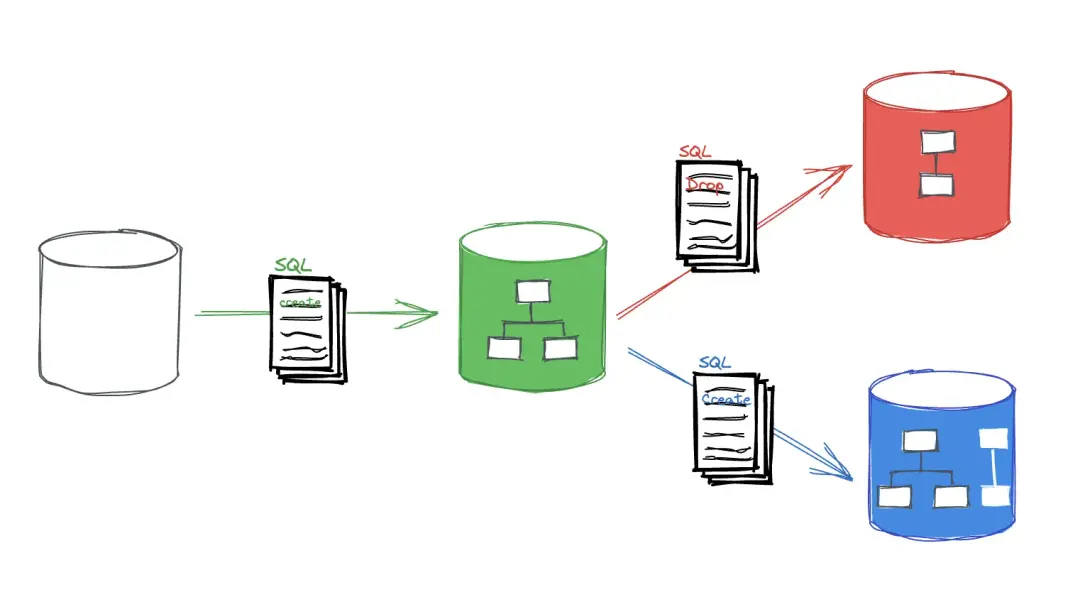
Instead of relying on migration frameworks, we can use a more direct approach where the table structure is defined in code. This way, we can dynamically update tables without maintaining migration history.
SQLMigrately
SQLMigrately is a simple tool that performs SQL migrations live at runtime. It is designed to be used in development environments, where you want to apply changes to your database schema without having to stop the application or in production if you are brave enough and know what you are doing (me).
Installation
pip install sqlmigratelyUsage
The main function of the library is migrate_table, which given a dataframe, a
table name, and a database engine, will update the table schema to match the
dataframe schema. the function has other optional parameters that allow you to
control the behavior of the migration.
import pandas as pdfrom sqlmigrately import migrate_tablefrom sqlalchemy import create_engine# create a connection to the databaseengine = create_engine('sqlite:///test.db')# read the current schemadf = pd.read_sql('SELECT * FROM users', engine)df| name | age | city |
|---|---|---|
| John | 20 | New York |
| Doe | 30 | Los Angeles |
# create a dataframe with the new schemadf = pd.DataFrame({ 'name': ['Jane', 'Smith'], 'age': [23, 42], 'city': ['Ohio', 'California'], 'country': ['USA', 'USA']})# apply the migrationmigrate_table(df, 'users', engine, push_data=True)# show updated table and schemadf = pd.read_sql('SELECT * FROM users', engine)| name | age | city | country |
|---|---|---|---|
| John | 20 | New York | NULL |
| Doe | 30 | Los Angeles | NULL |
| Jane | 23 | Ohio | USA |
| Smith | 42 | California | USA |
Function Parameters
the full signature of the migrate_table function is as follows:
def migrate_table( table_name: str, df: pd.DataFrame, db_eng: Engine, *, push_data: bool = True, add_cols: bool = True, remove_cols: bool = False, column_type_map: dict = None,): """ Update given `table_name` schema in the database to match the schema of the given `df`. Assumes minimal changes to the table schema. Args: table_name (str): name of the table df (pd.DataFrame): dataframe to migrate db_eng (Engine): sqlalchemy engine push_data (bool, optional): whether to push dataframe data to the table. Defaults to True. add_cols (bool, optional): whether to add new columns in dataframe to the table. Defaults to True. remove_cols (bool, optional): whether to remove removed columns from the table. Defaults to False. column_type_map (dict, optional): mapping of column names to their types. Defaults to None, which means that the types are inferred from the dataframe. Raises: TableDoesNotExistError: raised when the given table does not exist in the database """The library also provides other helper functions that can be useful for dealing with SQL databases, such as:
get_schema_diff: get the difference between the dataframe and the table schema
@dataclassclass ColumnDiff: """class to hold the difference between two sets of columns""" added: List[Dict[str, Any]] = field(default_factory=list) removed: List[Dict[str, Any]] = field(default_factory=list)def get_schema_diff(table_name: str, df: pd.DataFrame, db_eng: Engine) -> ColumnDiff: """get the difference between the dataframe and the table schema"""get_table_schema: get the schema of a table in the database
def get_table_schema(table_name: str, db_eng: Engine) -> Dict[str, str]: """get mapping of table columns and their types"""map_type: map pandas types to sql types
def map_type(dtype: str, *, default: str = "TEXT") -> str: """map pandas dtype to sqlalchemy type"""